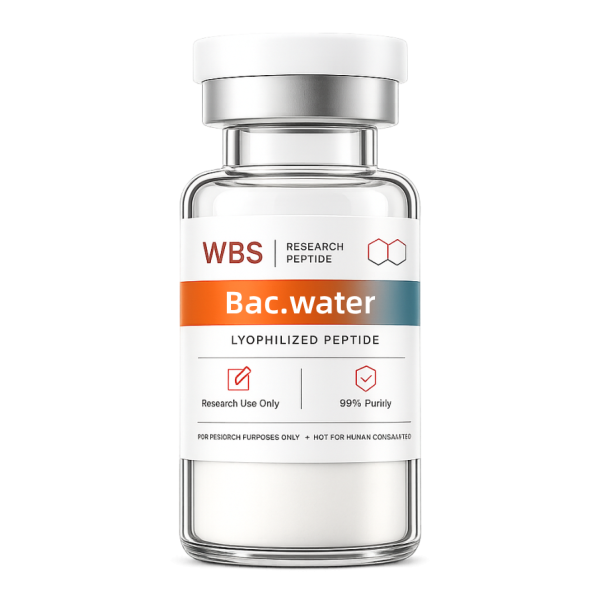
BAC Water is a sterile laboratory solvent used in research workflows for reconstitution, dilution, and controlled sample preparation. It supports consistent handling of lyophilized research materials when selected according to the material's solubility requirements. For laboratory research use only.
These are order-level reviews from the same warehouse, not ratings of this individual product.
BAC Water is used in laboratory workflows as a controlled solvent for preparing research materials. Selection depends on the target material, required pH environment, and sterility needs of the experiment.
In research handling, solvent choice can affect dissolution behavior, sample clarity, and short-term stability after preparation. BAC Water is therefore documented as part of the preparation workflow so researchers can track solvent compatibility, lot identity, and storage conditions.
This product is supplied as a liquid. Unopened vials can be stored at room temperature for up to 2 years when kept sealed and protected from light. Avoid excessive heat and repeated temperature changes during storage.
After opening or first puncture, store the liquid at 2-8°C, protected from light, and use it within 30 days. Label the vial with the opening date. Use sterile handling, keep the container tightly closed, and do not use the material if contamination, persistent particles, unexpected cloudiness, or discoloration is observed.
Check the material's solubility guidance first. Bacteriostatic water is commonly used for many peptide workflows, sterile water is used when no preservative is desired, and acetic acid water may help with materials that need a mildly acidic solvent.
A small air space or bubbles can occur during filling and transport. Inspect the seal, confirm there is no leakage, and allow the vial to rest upright before use.
No. The solution should be clear and free of visible particles. If cloudiness, floating material, discoloration, or leakage is present, do not use it and contact support with photos and lot information.
Use sterile technique, wipe the stopper before each access, avoid touching sterile surfaces, and keep the vial refrigerated when not in use. Track the first puncture date clearly.
Only if your laboratory SOP allows it. To reduce cross-contamination risk, use sterile handling and avoid using a solvent vial that may have contacted another material.
Contact our online support for real-time communication about products, orders, shipping, payment, or bulk supply.