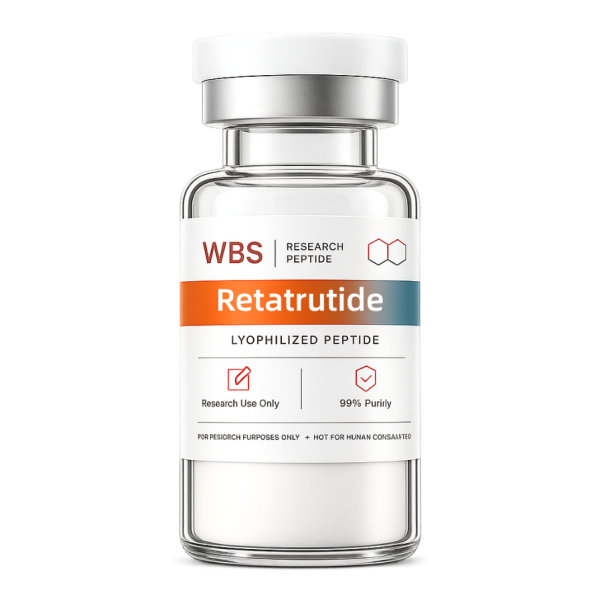
Retatrutide is an investigational research material commonly evaluated in laboratory models involving GLP-1, GIP, and glucagon receptor pathway research, including metabolic signaling, energy-balance pathways, and appetite-related signaling. For laboratory research use only.
These are order-level reviews from the same warehouse, not ratings of this individual product.
Retatrutide is studied as a multi-receptor incretin agonist in controlled laboratory workflows. It is commonly used in models involving GLP-1, GIP, and glucagon receptor pathway research, including metabolic signaling, energy-balance pathways, and appetite-related signaling.
Research interest in Retatrutide comes from its ability to help evaluate pathway behavior, receptor or target response, formulation stability, and analytical performance under controlled laboratory conditions. Results depend on model design, material handling, and validated research protocols.
This product is supplied as a lyophilized powder. Unopened vials can be stored at room temperature for up to 2 years when kept sealed, dry, and protected from light. Avoid excessive heat, moisture, and repeated temperature changes during storage.
After reconstitution, store the solution at 2-8°C, protected from light, and use it within 30 days. Label the vial with the reconstitution date. Use sterile handling, avoid vigorous shaking and repeated freeze-thaw cycles, and do not use the material if the seal is damaged or if persistent particles, unexpected cloudiness, or discoloration is present after dissolution.
Lyophilized Retatrutide can appear as a thin film, small cake, or light residue on the bottom or side wall of the vial. This is normal for freeze-dried material. Let the vial sit upright and inspect it under good lighting before reconstitution.
This can happen during shipping. Keep the vial upright and allow it to return to room temperature before opening. When adding bacteriostatic water, direct the liquid gently down the inside wall of the vial so it contacts the powder gradually.
Do not shake vigorously. Gently swirl or roll the vial until the material is fully dissolved. If bubbles form, let the vial rest refrigerated until the solution clears.
Allow the vial to rest at 2-8°C and inspect again. If cloudiness, particles, discoloration, or floating material remain, do not use that vial for research work and contact support with photos and lot information.
Use sterile technique, wipe the stopper before each access, avoid touching sterile surfaces, and keep the vial refrigerated when not in use. Discard the reconstituted solution after 30 days or sooner if contamination is suspected.
Repeated freeze-thaw cycles are not recommended because they may reduce material quality. For routine lab handling, keep the reconstituted solution refrigerated at 2-8°C and use it within 30 days.
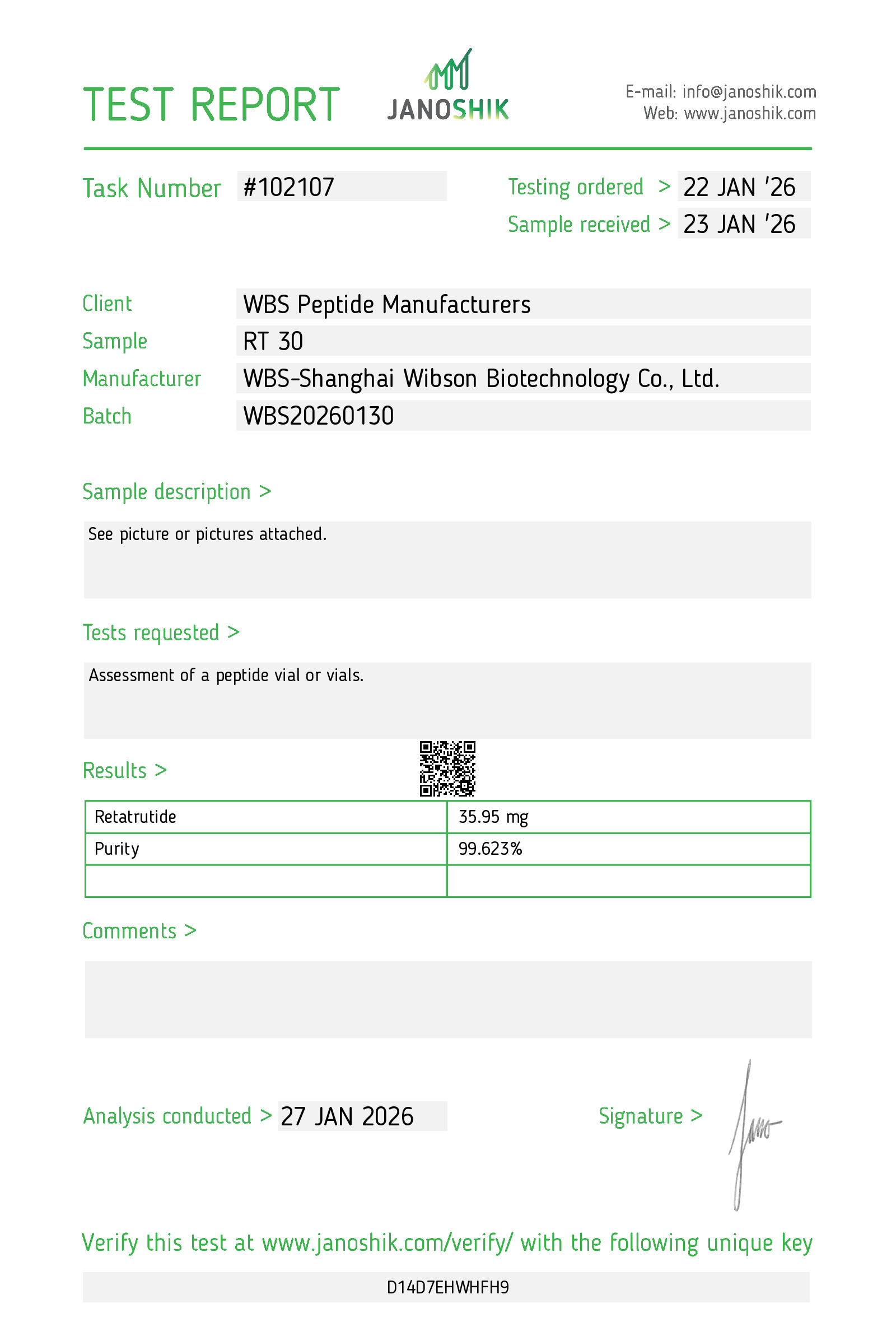
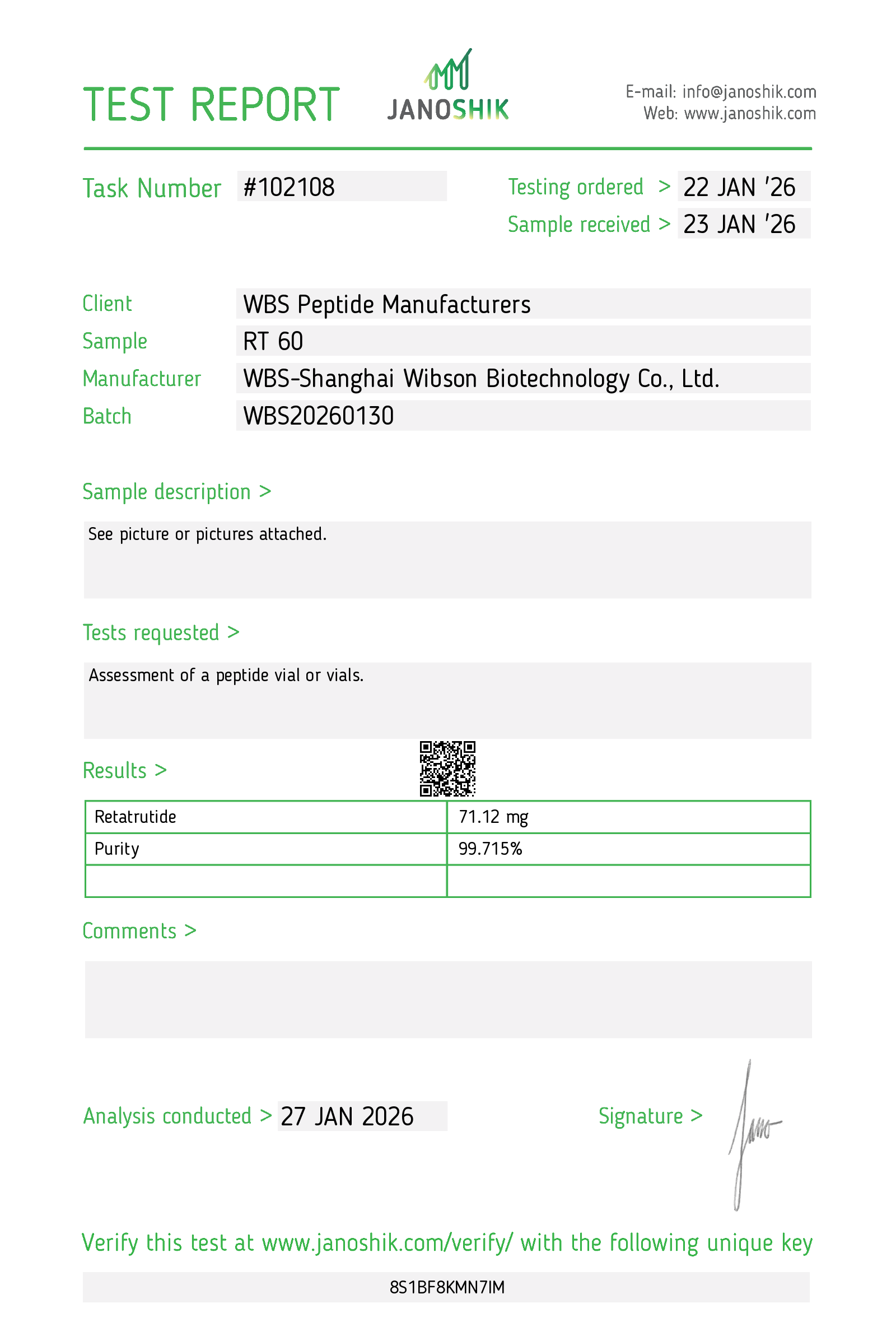
Contact our online support for real-time communication about products, orders, shipping, payment, or bulk supply.